This excerpt is from the Invisible Women Newsletter. Click here to join the 50k+ subscribers and read the full article.
When I was in Denmark, I got to meet Tora Schultz, an artist who has a show inspired by Invisible Women on at the Palace Enterprise gallery. This is hands down one of the coolest things that has ever happened to me.
Here we are posing next to her piece Stratification, which is made up of dishwasher racks — piled too tall for the average women to reach (remembering of course that the majority of this kind of work, both paid and unpaid, is done by women.)
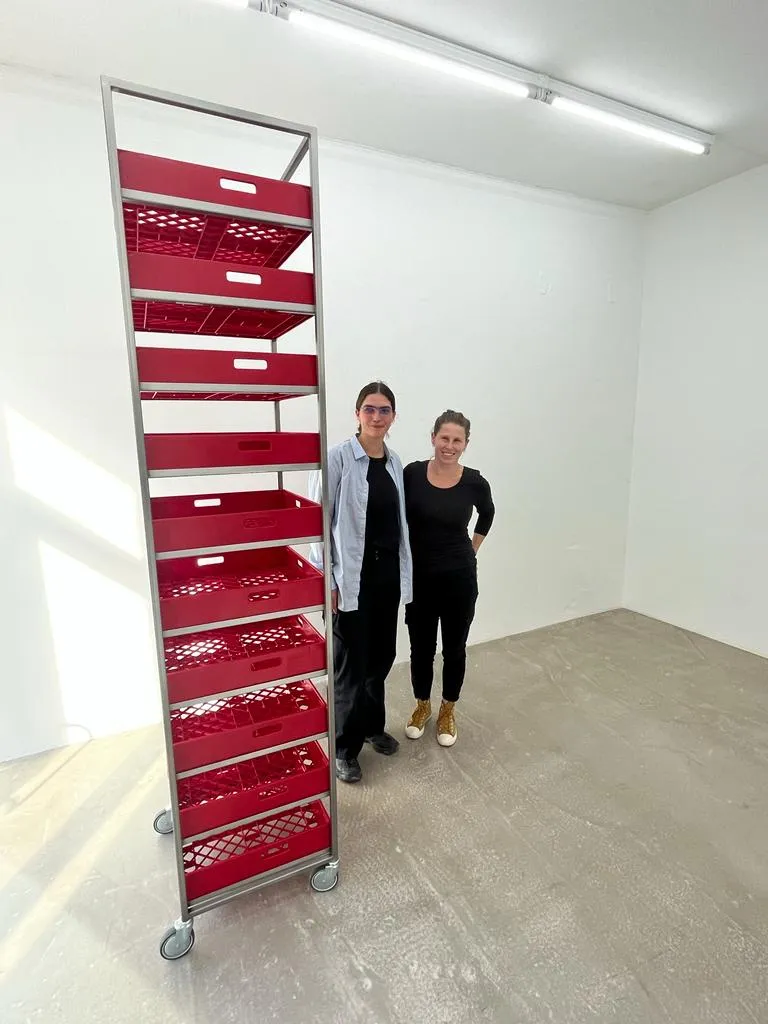
There is much more to this piece than that, it’s steeped in minimalist references, and is responding to a particularly famous piece by male artist…
“Stratification can be seen to allude to Donald Judd’s ‘stacks’ of uniform rectilinear units, such as Stack (Pile) (1972). These works share a searing red palette and, just as the number of units in Judd’s stacks is reduced to accommodate the equal spacing between units depending on the size of the exhibition space, Stratification has been built specifically to fit the height of Palace Enterprise. However, while Judd valued the box for its symbolic neutrality, Schultz’s plastic trays are far from impartial. If Judd’s stacks can be viewed as totems to the machismo of mid-century minimalism, Schultz’s are concerned with the gendered strata of society.” (Source)
Making unpaid care visible AND challenging default male “neutrality”? ? I could not love this more.
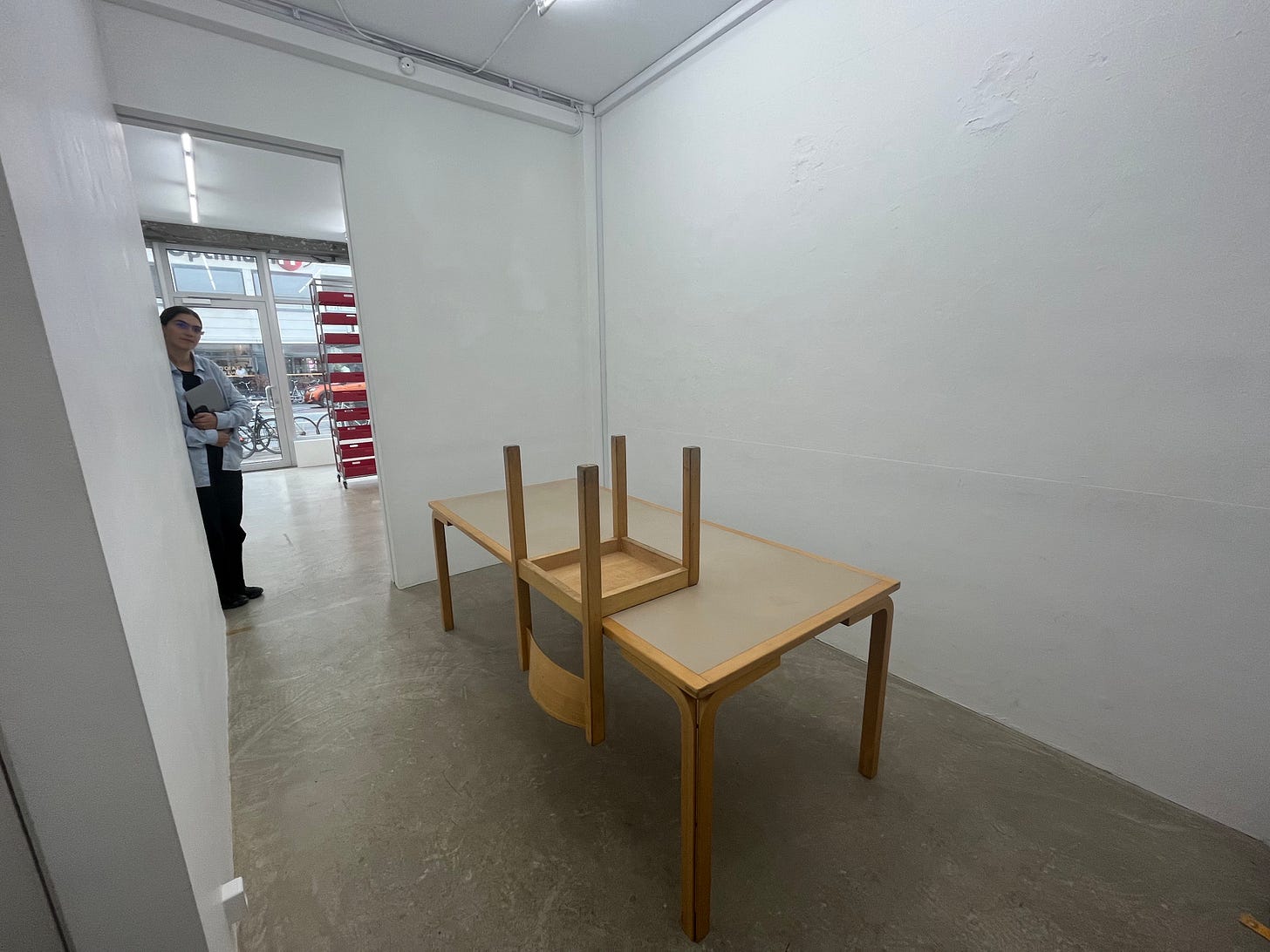
The design of the chair encourages students to sit in the same position, based upon a male model. Women, whose bodies do not align with this male template, are forced to sit awkwardly. Just as Schultz’s playful title conjures a dominant/submissive sexual encounter, the Olesen chair sees the female body submit to a default male design. (Source)
Schultz also showed us some photos of the exhibition she’s working on at the moment. It’s going to be based around the female car crash test dummy developed by Astrid Linder, the Swedish traffic safety professor I interviewed for Invisible Women and for episode 1.4 of the podcast — and I’m so excited for it!
For more reporting on this trip and the state of feminism in Denmark, check out the entire newsletter.