This excerpt is from the Invisible Women Newsletter. Click here to join the 50k+ subscribers and read the full article.
As I wrap up 2024, I wanted to highlight two examples of Invisible Women showing up in the world; first, Her Story, a major feature film described as “China’s answer to Barbie” as well as in an excellent speech by Commissioner for Equality at the European Parliament, Hadja Lahbib.
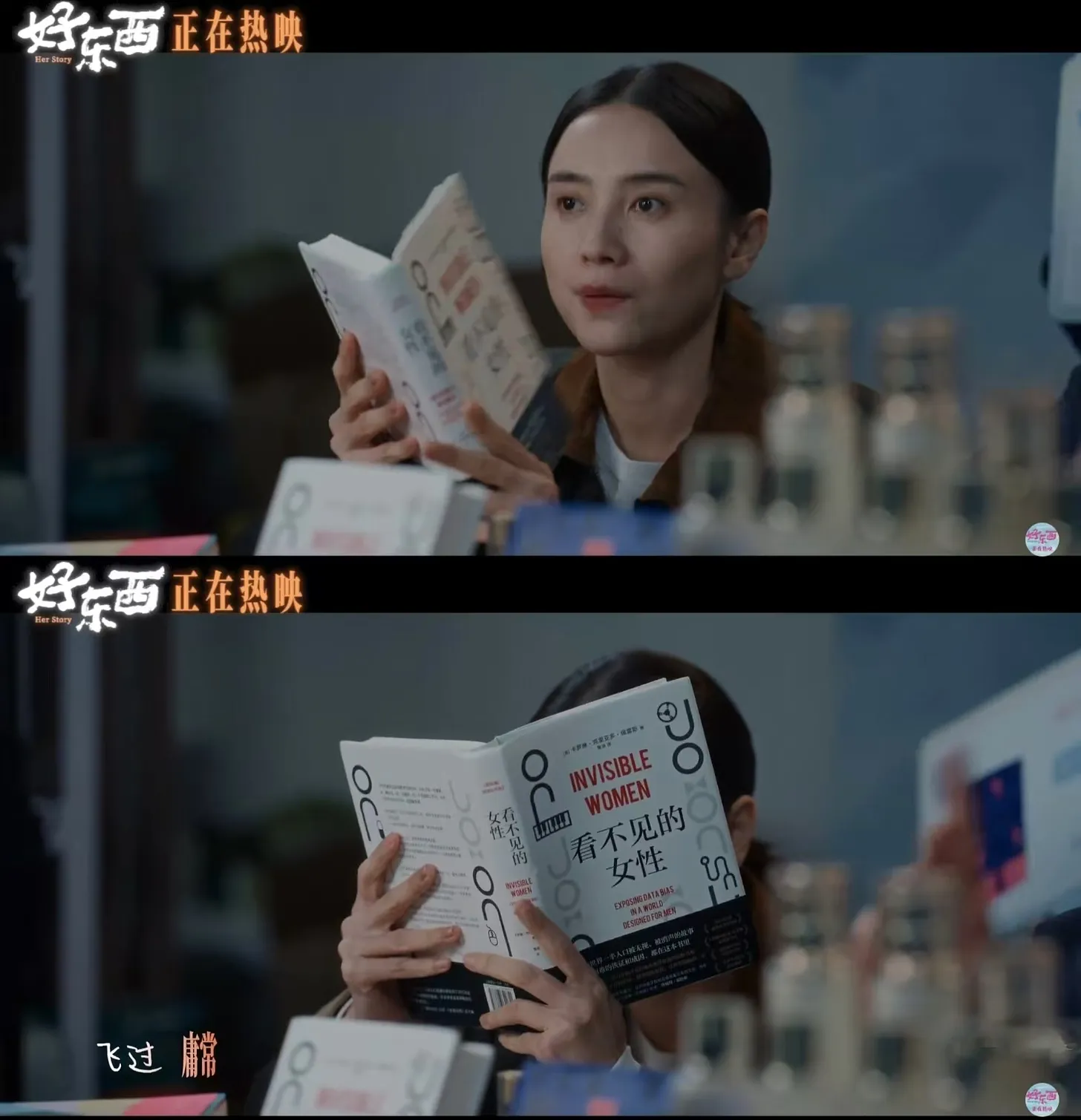
As I wrote in my newsletter, “If you follow me on instagram you may already know the exciting news that Invisible Women features in Her Story, the sleeper hit that has been described as “China’s answer to Barbie”, and which is currently selling out cinemas across the UK and US, and topped China’s box office for weeks.
How cool is that?!
When I posted about this Very Exciting News on social media I had yet to watch the film — and wasn’t sure I was going to be able to given it’s been selling out showings every day, but there are some perks that come with your book being featured in a film and one of those perks is that the distribution company can be persuaded to send you a password protected link so you can watch said film from the comfort of your own home.
And I’m so glad I did, because beyond it obviously being thrilling that IW was featured in Her Story, I LOVED this film. It was literally laugh-out-loud funny, as well as being sweet and tender and genuinely female-centred.
The film follows the life of two women, Wang Tiemei, a single mother and journalist, and Xiao Ye, the free-spirited lead singer of a rock band, and Tiemei’s new neighbour. It’s a feminist buddy film with a side order of romantic comedy — but refreshingly, the buddy part is the main event, with the central narrative arc being not will they/won’t they with their romantic interests, but will they/won’t they as BFFs.
One of the things I really loved about the film is how it centres women’s unpaid care, but not in a preachy or clumsy way, it is just very naturally woven into the narrative, most brilliantly I thought in a sequence where Xiao Ye, who uses every day sounds in her music, is playing a series of them to Tiemei’s daughter, Moli and asking her to guess what they are. Alongside Moli’s guesses, the audience sees a montage of Tiemei doing various chores around the house that make the same noise as the recorded sound. It’s a touching and very clever scene and I couldn’t have loved it more.
I was also a big fan of the scene where the eminently capable, regular electric drill-wielder Tiemei tells Xiao Ma, her younger male lust interest, that she isn’t “looking for a man to do chores for me,” in response to his offer to take over from her as she fixes her air conditioning unit.
“Then what are you looking for?” he asks. “What do you think,” she replies, matter-of-factly.
On the subject of men, there has been some criticism from certain male quarters of the internet that the men in this movie don’t come off too well and, well, I can’t disagree exactly, but what I can say is that it never feels mean-spirited. It’s simply poking gentle fun at certain tiresome male tics that I can assure you I have despaired of with my friends many times (and, did I mention, it’s very funny?).
There’s the eye-roll-inducing douche who immediately post-sex tells you how broken he is, that he just can’t commit; there’s the sweet but inept man who is trying, but has learned what women want from watching “videos” (nothing violent or overly racy, don’t worry, it’s just funny and ultimately quite sweet); and, of course, there’s the man who, having just discovered feminism, is now the best feminist in the whole wide world (spoiler: he is in fact not the best feminist in the world).
In conclusion, I loved this film and cannot recommend it enough.”
Finally, I am always encouraged to see the message and lessons of Invisible Women resonating with the leaders and activists working to make the world a fairer place. To that end, it was encouraging to read Commissioner Lahbib’s remarks on Gender in Health presented at the European Parliament on December 12th.
Commissioner Lahbib graciously cites Invisible Women as an influence for her own talk and her goal to “…make women more visible, across every area of our
societies. I want women to be more than just visible. I want them to lead, to inspire, and to thrive. This is good for women. This is good for men. And this is good for our Union.”
She sets out three areas of focus for her work, addressing how we collect data, ensuring that health systems address the needs of each individual (rather than a “one-size-fits-all approach”) and focusing on sexual and reproductive health and rights.
Commissioner Lahbib points out that “women face higher rates than men of diseases such as breast cancer, osteoporosis, and auto-immune diseases. Other diseases — like diabetes, depression, and cardiovascular diseases — affect men and women differently. Factors outside the health sector also have a dramatic impact on women’s health
— from socio-economic status and education to unfair work divisions and violence against women. As our European continent ages, women play a vital role as healthcare professionals and caregivers. Almost 80% of health workers in the EU are women. They are the frontline heroes keeping Europe healthy.”
She calls for women to be better represented in clinical trials, to play a greater role in developing industry safety standards and to ensure women’s health is treated as a serious and important issue.
I’m glad to see this clear focus from Commissioner Lahbib and look forward to her term in office.
You can read more about Commissioner Lahbib and her remit with the European Parliament here